Category: Uncategorized

  • “But I’m Social Commentary”

    “But I’m Social Commentary”

    In 2004, Massachusetts became the first state to legalize same-sex marriage. In 2015, the U.S. Supreme Court struck down all same-sex marriage bans, making it legal across all 50 states for same-sex couples to get married. Despite it taking many years for same-sex couples to get the same legal rights as their heterosexual counterparts, they were still prevalent in culture. Of course, there were the 1969 Stonewall riots that occurred, and there were many artworks and films that paint the LGBT community in a positive light. One of those films is a personal favorite of mine, “But I’m a Cheerleader.”

    “But I’m a Cheerleader” is a 1999 romantic comedy film about a high school girl, Megan, who is sent to an anti-gay conversion camp after her family and friends suspect her of being a lesbian. Spoilers: Megan was a lesbian, and ends up happily running away to start a new life with her girlfriend Graham, another lesbian in the camp. 

    The movie came out in the 90s, an era where same-sex relationships were still looked down upon by the general public. In a Gallup poll documenting the public’s perception of LGBT rights, in 1999, 62% of people agreed that same-sex marriages should not be recognized. There was also the Defense of Marriage Act of 1996, which stipulated that marriage was limited to one man and one woman. Facing legal and societal stigmas, it’s safe to say the 90s were not a great time for the LGBT community.

    In “But I’m a Cheerleader,” most of the cast reflected the ideas on LGBT people during its time. However, Megan’s family and the staff at the conversion camp were portrayed in a negative light. They are portrayed as out of touch and repressed, and satirized to a comical degree. In a funny twist, one of the conversion camp staff members was played by RuPaul, a well-known drag queen. The very concept of conversion camps, which were popular in the 90s, is widely mocked in the movie.

    On the other hand, the LGBT people in the movie are humanized. They are not just portrayed in a positive light, but they are portrayed as regular people trying to live their lives. Megan— and her girlfriend, Graham— gets a happy ending and learns to live life on her own terms. Back in the day, it was especially rare for movies and media to have main characters who were part of the LGBT community, let alone have happy endings. The movie wasn’t perfect, but it broke boundaries during its time.

    As the United States’s views on same-sex relationships changed over the years, the perception of the film changed as well. When it first released, it was panned by conservative critics. It even first received a NC-17 rating due to “homosexual content.” But years later, it is now seen as an iconic LGBT film loved by people in and out of the community. 

    “But I’m a Cheerleader” took the societal views of the LGBT community of the time and not only flipped them on its head, but took the chance to tell a a feel-good and entertaining love story between two girls. 

  • “Oreos” and Stereotypes

    “Oreos” and Stereotypes

    Note: This is a class assignment for my MCO 425 class.

    Growing up, I was often called an “Oreo” by my peers. If you’re unsure what that means, “Oreo” is a term used against black people who are seen as “rejecting” their culture. It just means “Black on the outside, White on the inside.” But how was I rejecting my culture? According to my own classmates, it was because I was polite, I didn’t know the latest rap artists, I was in honors classes, and I was a little on the slender side. The most disheartening thing about this was that my peers were also black, and they associated those traits with “rejecting” my culture. It shows that generalizations and stereotypes that appear in the media can even affect the perception of the people they’re stereotyping.

    In case you’re unaware: I’m a black woman. Black women have many negative stereotypes that stem from decades of media portrayals. The one most prevalent stereotype—and one of the reasons I was labeled an Oreo—is the “Angry Black Woman.” Black women are depicted as aggressive, sassy women with attitude problems. 

    This couldn’t be further from the truth. Aggression and attitude problems are not a specific issue of a particular race. Anyone can have these issues regardless of their identity. And yet, it’s black women who face the majority of these depictions. A notable example of this is the way Serena Williams has been portrayed in the media due to her expression of anger and frustration. A racist depiction of the tennis player angrily stomping on a racket was even drawn by an Australian cartoonist in response to these depictions. It’s cases like Williams’, and the depictions of black women in media, that make black women hesitant to publicly express anger. It’s not only harmful for black women, but also unhealthy for them mentally.

    Another stereotype black women face is the Jezebel. Being seen as promiscuous and sex-addicted has been a prevalent generalization since slavery. This also manifests in how our bodies are supposed to look; black women are often shown to be curvy or “thick.” Having a large butt and breasts—while also having a tiny waist—has been the way black women have been depicted for some time. 

    The way the Jezebel stereotype affects black women is that they are less likely to be taken seriously in cases of abuse and sexual assault. After Megan Thee Stallion accused Tory Lanez of shooting her, many said her claims were false due to the nature of her music and aesthetic. They would post pictures of her revealing outfits and videos of her partying to undermine her allegations. The Jezebel stereotypes further inflame the already misogynistic “asking for it” narrative, which harms black women the most.

    So, how does this circle back to me being compared to a cookie? As I mentioned earlier, sometimes stereotypes become so prevalent that they begin to influence the perception of the people being stereotyped. Many of these generalizations are still being pushed in media created by black people. They’re in the music we listen to, the shows we watch and the beauty standards pushed onto us. The lines between stereotype and identity begin to blur, and people start to see stereotypes as an integral part of their identity.

    This leads to people who do not fit these stereotypes being the ones isolated by others. And it creates a cycle: Either these people accept isolation from others who share their identity, or they adapt to these stereotypes as an attempt to conform. No one wins in the end.

    I ended up choosing the former, so I was a little lonely until I had to transfer to a new high school. However, I discovered a new community of people who shared my identity, without labeling me for being different. The term “Oreo” no longer affects me, because I know I am not defined by how others perceive me.

  • A Look Into “Birtherism”

    A Look Into “Birtherism”

    Note: This is an assignment for my MCO 425 class.

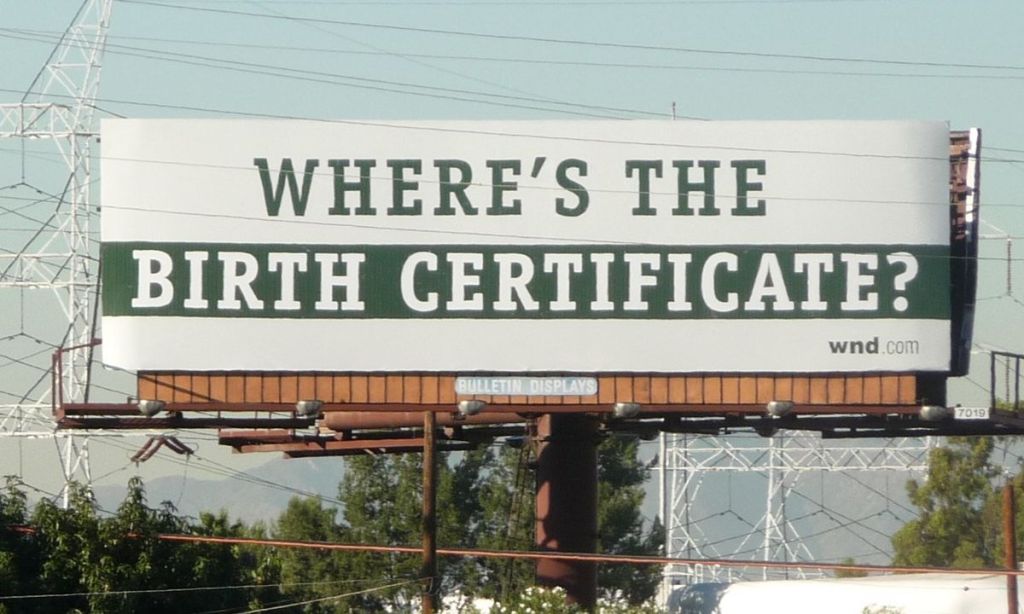
    Birtherism is a conspiracy theory that started due to people questioning the legitimacy of former President Barack Obama’s U.S. citizenship. The original smear campaigns could barely agree on Obama’s alleged origins; some say that he was born in Kenya, while others say he lost his U.S. citizenship when he lived in Indonesia as a child. The controversy caused the Obama campaign to release copies of his Hawaiian birth certificate publicly. Birthers—followers of the birtherism conspiracy—claimed that the birth certificates were forged. While the conspiracy died down, other notable politicians such as Nikki Haley and Kamala Harris became victims of similar claims.

    Most people trace the origins of birtherism to Illinois political candidate Andy Martin. Then, Republican and anti-Obama Democrat politicians began to question the legitimacy of Obama’s citizenship. Notable websites, online forums and radio shows began to parrot the theories, exposing them to a wider audience. It only started to grow in 2009, when conservative commentator Lou Dobbs urged Obama to release his birth certificate on his CNN show. The birtherism conspiracy exploded in 2011, when prominent media figure and current President Donald Trump publicly claimed he doubted the validity of Obama’s citizenship. Trump went on to claim that he had proof that Obama was not a U.S. citizen, but he later conceded and stopped supporting the theory in 2016.

    In the end, Politico reports that in a poll conducted by Public Policy Polling, 51% of Republicans believed Obama was not a natural-born citizen. Many events led to this outcome, but I would like to focus on the art of persuasion first. 

    The Language of Persuasion” by the New Mexico Literacy Project highlights persuasive techniques used by both individuals and big companies. A basic persuasion technique I can immediately identify is “Experts.” Many politicians, chief justices, and journalists vouched for the validity of the theory. They supported the claims and urged Obama to prove his citizenship. As regular people, we are more likely to trust people if they have proven experience. Why wouldn’t people trust the politicians who create their laws and the journalists they watch on TV? As soon as experts hopped on the birtherism train, it was bound to reach the mainstream.

    I’d like to argue that an advanced persuasion technique that led to the rise of birtherism was “Timing.” Philip Klinkner in “The Causes and Concequesces of ‘Birtherism’” points out that Google searches surrounding Obama’s birth peaked during his election campaigns and Donald Trump’s statements in 2011. When someone as notable as Obama is currently in people’s minds, the controversies and theories surrounding him would also be highlighted. This also means more people would be exposed to the conspiracy theory due to its current relevance in the news cycle.

    While birtherism has mostly died down from its peak, the conspiracy theory reemerged in small groups with new targets. In 2020, Trump questioned the validity of Kamala Harris’s eligibility to be Vice President, which led to a revival of birtherism for a short time. And in 2024, Trump fueled birtherism theories against Nikki Haley when he questioned her eligibility to run for president.

  • A 24-Hour Media Timeline— Except with my Data Involved.

    A 24-Hour Media Timeline— Except with my Data Involved.

    Another day, another media timeline. Except, I’m also tracking what potential data is being set out. Every app, every social media site, and every ad collects a fragment of data on you.

    So, for a class assignment, I’m doing another media timeline, but also a timeline of any data that could’ve been collected. All of this information was tracked on September 12, 2025.

    5:25 a.m. – After waking up and checking my smart watch, I go on YouTube and watch the Nintendo Direct livestream. This can show YouTube and Google that I enjoy video games and Nintendo products.

    7:35 a.m. – After the Nintendo Direct finishes, I go on Discord to discuss the livestream with friends. Discord is very transparent about the data it collects, such as the messages you send and device information.

    9:25 a.m. – After eating my breakfast, I mindlessly scroll on Instagram. I like a lot of cooking and fitness content, so it’s a majority of what Instagram recommends me.

    A cropped screenshot of my Instagram feed. Some of the videos are about cooking, vegan lifestyle, and fitness.

    11:20 a.m. – Went on a walk, so of course I had to listen to music. I listen to a lot of indie, J-pop and rock, so YouTube Music creates playlists for me with curated song recommendations. I prefer my own playlists, though.

    12:13 p.m. – Did a home workout on YouTube! This lets Google and YouTube know I’m into fitness content.

    1:42 p.m. – After working out, I look up a recipe for Kimchi-jjigae. On the website, there were ads for activewear. I think this is because of Google and Meta’s knowledge about how I interact with fitness-related content.

    4:42 p.m. – I went on X/Twitter and saw they were showing ads for mobile games I play regularly. I play most games on my tablet instead of my phone, which tells me these sites also have information about my other devices.

    8:00 p.m. – I check my bank account before heading to bed.

    I have personalized ads and data sharing information off for X and Instagram. So, it is concerning for them to still show me ads that are clearly tailored based on what I interact with on those social media sites. This could tell me they have similar algorithms, or that I may need to double-check my settings. But it only seems they use my data, especially about fitness content, to sell me things.

  • I’m Very Online: My 24-Hour Media Timeline

    I’m Very Online: My 24-Hour Media Timeline

    Note: This is an assignment for my MCO 425 Digital Literacy class.

    I didn’t grow up with the Internet. I didn’t get my first phone until I was starting middle school, and my only access to a computer was at the public library for an hour. In retrospect, this was a blessing in disguise- but this didn’t stop me from being captivated by what the Internet had to offer. Hence, I’m here getting a degree for a career dependent on the digital age.

    I tracked my digital and media consumption for an entire day. A fun experiment that showed how online I am, and I can’t wait to show you all too.

    4:46 a.m. – I’m awake, and the first thing I do is check my smartwatch. I wear it to track my sleep (sleepwalking sucks) but I take time to view any messages and news reports I get on the watch.

    4:55 a.m. – I’m on my phone in the bathroom now. I check the Cronkite News newsletter for the articles of the day. I also go on X (Twitter) and mindlessly scroll through pop culture news accounts.

    5:31 a.m. – After my shower and morning bathroom rituals, I’m back in my room on my laptop. I’m on Canvas, checking the syllabus and looking up a tutorial online on how to actually use WordPress. I also have a few YouTube videos playing on the TV for background noise; I personally like listening to “Financial Audit” by Caleb Hammer. Also, more checking emails- I love checking my email.

    8:03 a.m. – Went for a morning walk. Our neighborhood flooded in some areas, which was surprisingly very pretty looking. I used my smartwatch to track my steps to log on to my health app. I also listened to music on YouTube Music. If anyone’s curious: I listened to lots of Grimes on my walk.

    8:45 a.m. – Back home and applied for jobs and internships on Handshake. It took a lot of research to create a good cover letter and a resume that can be read by AI tools recruiters love to use these days. I also played a dress-up fashion game called Life Makeover to kill time.

    9:25 a.m. – I ate breakfast while looking at the New York Times’ coverage on Hurricane Erin. I again opened X to look at more pop culture and film news.

    11:45 a.m. – I went on Discord to talk with friends again while waiting for my telehealth appointment. After that, I booted up YouTube on my TV to rewatch “The Guy Who Didn’t Like Musicals” for the third time. It’s a great musical, I recommend it.

    12:30 p.m. – Workout time for me. I used YouTube to look up some at-home workouts. I ended up doing an abs and glutes workout and an arms and back workout. I’m not ashamed to admit I have my priorities.

    1:20 p.m. – I read more NYT articles on global news and American politics as I eat lunch. I like to be as aware as possible of what’s going on around me, even if it will never affect me.

    4:45 p.m. – I looked up recipes online to find meal inspiration for dinner. I listened to music while I cooked vegan breakfast quesadillas.

    5:35 p.m. – I checked another notification for a NYT article I was interested in reading. Afterwards, I did a quick aerobic workout. My nightly routine included checking Instagram and watching Reels as I brushed my teeth and got my hair in order.

    9:37 p.m. – It’s time for bed. I respond to my friends on Discord and Instagram one last time, and check more emails, before I put my phone down. I set my smartwatch up to track my sleep for tonight. Then, it’s finally bedtime.

    This was interesting to document. To be fully transparent: If I documented every time I watched a YouTube video to play in the background, this timeline would be way longer. I’m not afraid to admit that I am online. I enjoy it, it’s my future career, and these days the only way you can escape it is by being a hermit in the woods.

    Most surprising was how frequently I checked the news compared to anyone else in my family. It makes sense because I’m a journalism major, but I never expected to open news pages more than any social media. Like I said, I do like being aware. But I wonder if this habit of checking the news is both a good habit and a sense of anxiety I feel?

    Despite my most used application being YouTube, I don’t really trust it. Anyone can say anything on YouTube; it’s full of clickbait and inescapable bias. Out of all the things I used during this day, I would say I trust the New York Times out of all of them. It’s not perfect, but it’s at least less subjective than social media. I feel that I can put my faith in it a little more- another reason why I check it so frequently.

    Does the world and its people becoming more reliant on digital media scare me? Sometimes. But I learned to play the virtual cards I’m given, and I hope I can at least do some good with them.